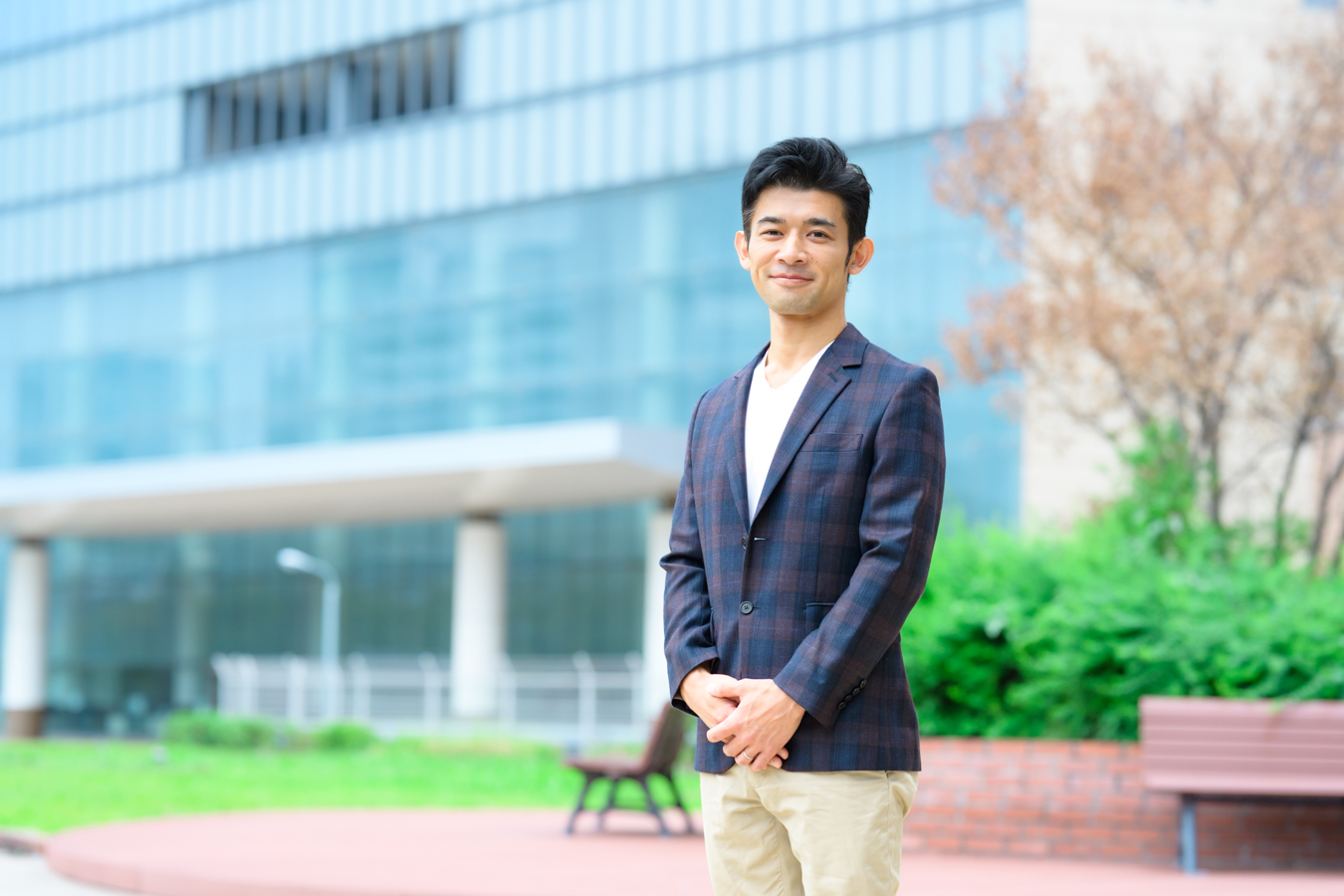
Expanding DS&AI education to medical universities is part of our mission as a school in specialized fields.
Dr. Sudo, you are involved in the development of model curricula and teaching materials for DS&AI education in the medical, dental, and pharmaceutical fields. Can you share with us how you came to be involved in these efforts?
I started programming during my doctoral studies in dentistry, where my research focused on genomic analysis of periodontal disease. After my studies, I was mainly involved in clinical work, but when the former Tokyo Medical and Dental University was selected for a Ministry of Education, Culture, Sports, Science and Technology (MEXT) project to promote DS&AI education in the medical and dental fields, they began recruiting full-time faculty for the initiative, and I was invited to join. I’d been interested in AI for a long time, so I really wanted to try it.
We began by preparing the curriculum, but since every medical university department has many compulsory subjects, it is not easy to add new ones. After interviewing teachers involved in data science and listing all the course content, we consulted with them to see if the overlapping parts could be consolidated. By steadily repeating this process, we were able to secure class time little by little. Next, we referenced the model syllabi created by the Japan Inter-University Consortium for Mathematics, Data Science and AI Education to structure the specific course content and build the full curriculum. I am also in charge of actual classes.
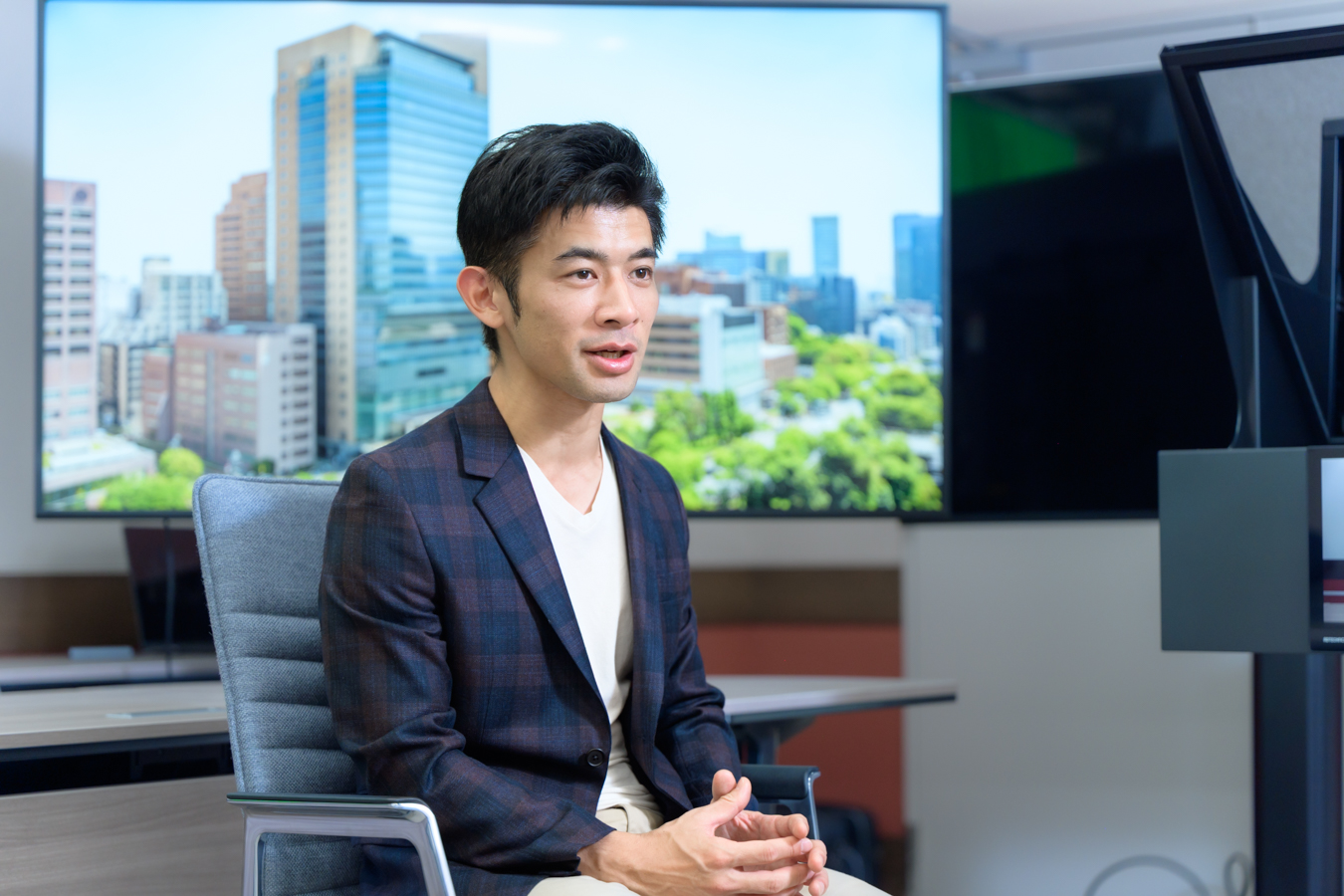
As the former Tokyo Medical and Dental University was the only DS&AI school in the aforementioned consortium that specialized in medical, dental, and pharmaceutical sciences, our primary mission is to develop and disseminate its educational curriculum and expand it to other medical universities. We continue to hold regular workshops, learning about initiatives at other medical universities while working to increase the number of institutions participating in and supporting DS&AI education.
DS&AI utilization skills — a new addition to the Model Core Curriculum for Medical Education.
What challenges are involved in expanding a curriculum specific to the medical field to other universities?
In the fields of medicine, dentistry, pharmacology, and nursing, MEXT has established a Model Core Curriculum, and institutions are required to incorporate 60 to 70% of its content in classes. Since 2022, a significant amount of DS&AI-related content has been incorporated into the Model Core Curriculum, and there were many cases where medical teachers were confused about what to teach and how. Even if they were to invite outside instructors who can teach the material, there wouldn’t be enough of them. To address this issue, we would like to hold workshops to demonstrate our teaching methods and give them confidence that even non-specialized medical teachers can teach DS&AI with a little bit of study.
At the request of the consortium, our university is now serving as the primary institution in developing standard teaching materials for the applied basic level in medical education. We are working as a team with medical, dental, pharmaceutical, and nursing teachers from other universities. The first set was completed in December 2025 and is scheduled to be released to member institutions of the consortium within 2026.
I always make sure to talk to students about the ethics and problems involved in the use of AI.
What kind of classes do you hold at the university, Dr. Sudo?
The university’s undergraduate medical and dental science program consists of six departments and majors, and DS&AI literacy is required in all of them. I plan my classes with a focus on making the programming experience as accessible as possible by using data from the medical field, and I teach them online to around 300 students. These classes were first launched in the 2021 academic year, which coincided with the COVID-19 pandemic, but I continue to hold classes in this way.
I teach programming to first-year undergrads who often say they’re new to Word or Excel, so it’s not uncommon for them to get stuck because of typing errors. Students who are struggling with the same kinds of issues are then moved to another room, where support faculty and senior TAs (teaching assistants) can answer questions using the chat function.
The challenge is that most medical and dental students are less interested in programming than our science and engineering students at the university. Because of this, I think it is important to motivate students by showing them how AI can be used in medicine and what aspects are fascinating, thereby communicating the appeal.
For example, at the end of a class I teach to first-year students called Introduction to AI and Big Data in Health Sciences, students use their computers to run a program that uses AI to classify X-ray images of the lungs as “healthy” or “pneumonia.” This has been very well received by the students, and it gives them a clear example of how AI can be used in clinical practice. The same is true when we ask teachers from other universities to watch our classes at workshops. We place the highest priority on making our classes easy to understand.

Meanwhile, I always make sure to talk to students about the ethics and problems involved in the use of AI, such as the fact that AI diagnosis is limited in accuracy and is currently used only as a diagnostic aid, and the question of who is responsible if an error occurs in AI diagnosis. After gaining an understanding of these issues, I would like students to come forward and start thinking about how AI might be applied in their research or clinical work. Personally, I think there is plenty more room to apply AI in medical education before we look toward clinical practice.
DNA analysis of dental calculus taken from human bones revealed that people in the Edo period also had periodontal disease.
By the way, what kind of research do you personally do, Dr. Sudo?
When I was a doctoral student, I studied a disease known as aggressive periodontitis. Periodontal disease tends to occur in middle-aged and older people, but some people lose their teeth in their teens and 20s. Since the genetic causes were still unclear, I began my research under the hypothesis that there might be a common genetic abnormality among such patients. We’ve been able to report that a certain percentage of Japanese patients diagnosed with aggressive periodontitis have genetic mutations at specific gene, but the mutations shared by patients from many countries and regions remain unconfirmed. Since the underlying mechanisms are still unknown and treatment is essentially the same as for chronic periodontitis, the 2018 classification removed the distinction between “aggressive periodontitis” and “chronic periodontitis,” grouping them together under periodontitis.

You and your team’s research about how people in the Edo period also suffered from periodontal disease was showcased in an NHK program, wasn’t it?
I didn’t lead that study. It was a joint research project with a group investigating bacteria that cause periodontal disease. DNA analysis of dental calculus taken from human bones from the Edo period revealed that the composition of bacteria in our mouths was different from that of people in that era.
Image analysis of human bones revealed that people in the Edo period also suffered from periodontal disease, suggesting that the bacteria responsible for periodontal disease may have changed with the times and people’s diets. This approach is called bioinformatics, a field that integrates biological knowledge with computational methods. Within bioinformatics, data-science approaches are used to analyze large-scale biological data, including DNA.
When I became involved in DS&AI education, I began to think about the possibility of social implementation of AI in clinical practice, for example, by analyzing oral images taken in dentistry to instantly detect cavities and lesions. However, there is still a long way to go before this can be implemented in society, so for now, I am focused on working with the medical department faculty to introduce AI in medical and dental education.
In the medical and dental departments of our institute, there is a clinical practice test called the Objective Structured Clinical Examination (OSCE), which students are required to take before graduation. These tests require faculty to evaluate every aspect of the student’s interactions with simulated patients. For this reason, the faculty have to stick around all day. To reduce the amount of labor required for these tests, we are exploring the possibility, for example, of creating a system that uses AI to evaluate images.
Become the creators of AI systems that will transform society.
Is there a message you would like to share with DS&AI students?
If I could go back to my school days now, I would make an effort to learn programming more thoroughly. In this day and age, it’s easy for anyone to start programming, and if you immerse yourself in it like a game and work hard to master it, there’s a chance you’ll be able to apply it to your work in the future. I encourage everyone to give it a shot.

In the world of dentistry, we take an interdisciplinary approach in which teams of experts from various fields work together to provide treatment, and in the future, I would like to see one AI expert added to each team. I advocate for having one data scientist per clinic. If there are people on the team who can quickly catch up on problems in clinical practice and what needs to be improved, and then come up with solutions by automating certain processes, I think it will revolutionize the medical field going forward.
Many doctors and dentists will become users of AI, but I hope to see some students come forward to take on the role of developing and implementing systems.
Off-the-Record Chat
I may not seem like the type, but art appreciation is one of my hobbies. When I was in university, I played on the American football team, but after a collision with another player during a game caused a subdural hemorrhage, my doctor told me I could no longer play. That’s what led me to develop an interest in art.
With time on my hands, I began to realize that this was an opportunity to give myself a cultural education. When I visited the Louvre Museum exhibition at the National Museum of Western Art with a friend, I encountered one painting that absolutely fascinated me. It was St. Joseph the Carpenter, created by the French painter Georges de la Tour. In the painting, a young Jesus holds up a candle, using the flame to illuminate Joseph’s hands as he carries out carpentry work. I was blown away by how light and shadow were depicted. I couldn't stop thinking about how moved I felt, so I went to see it again on another day.
After that experience, I started visiting museums regularly to try to relive that moment of inspiration. If you have a chance to visit the Louvre, I encourage you all to see St. Joseph the Carpenter.